Devices and prototypes we've built
A look at what we've built and repaired. The first photos are in, and more will go up here as Ehsan gets round to documenting the rest.
Car hand controls
Hand controls let a person drive using their hands, working the accelerator and brake without using their legs. Ehsan has built three of them since 2011.
For a lot of disabled people here, a working hand control is what lets them drive themselves, instead of relying on someone else for every trip. It's the work Ehsan is most proud of.
The three versions
Each one was built out of something already thrown away.
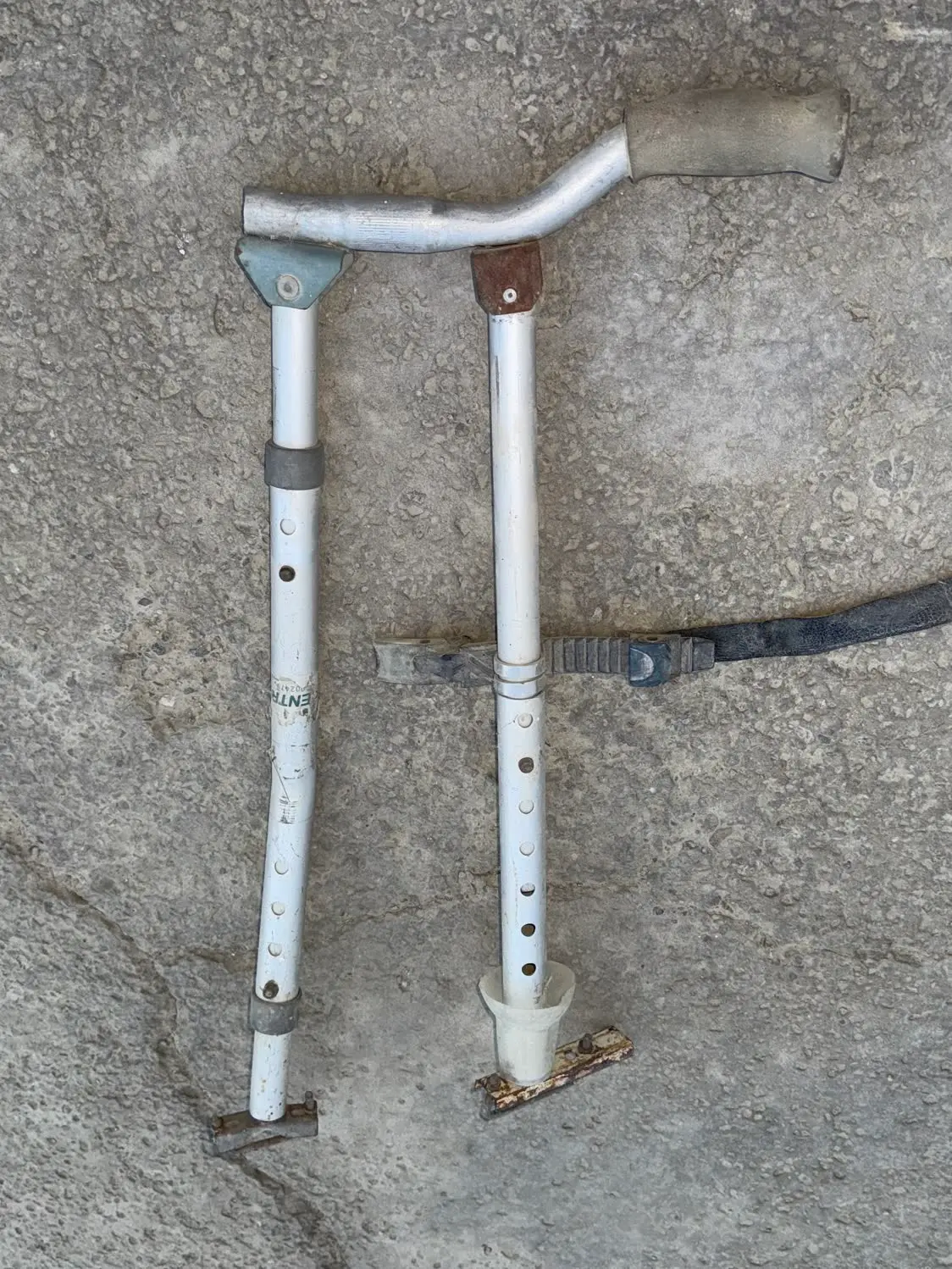
A crutch and a bicycle handle
The first one. Two tubes, with plates at the bottom that sit against the pedals, and the grip up at the top.
2011
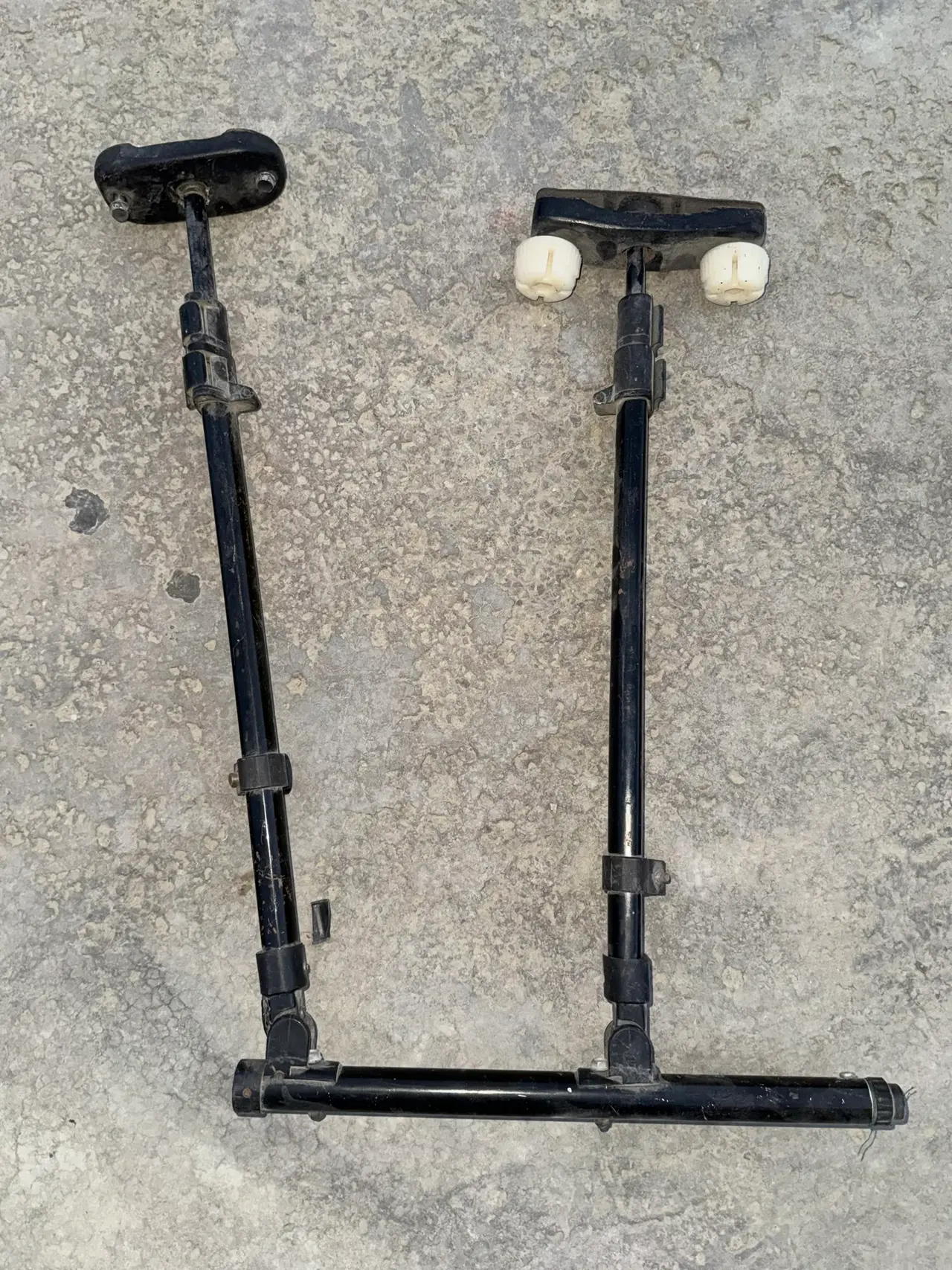
An old camera tripod
The second one, about five years later. The legs still telescope and clamp the way they did on the tripod.
About 2016
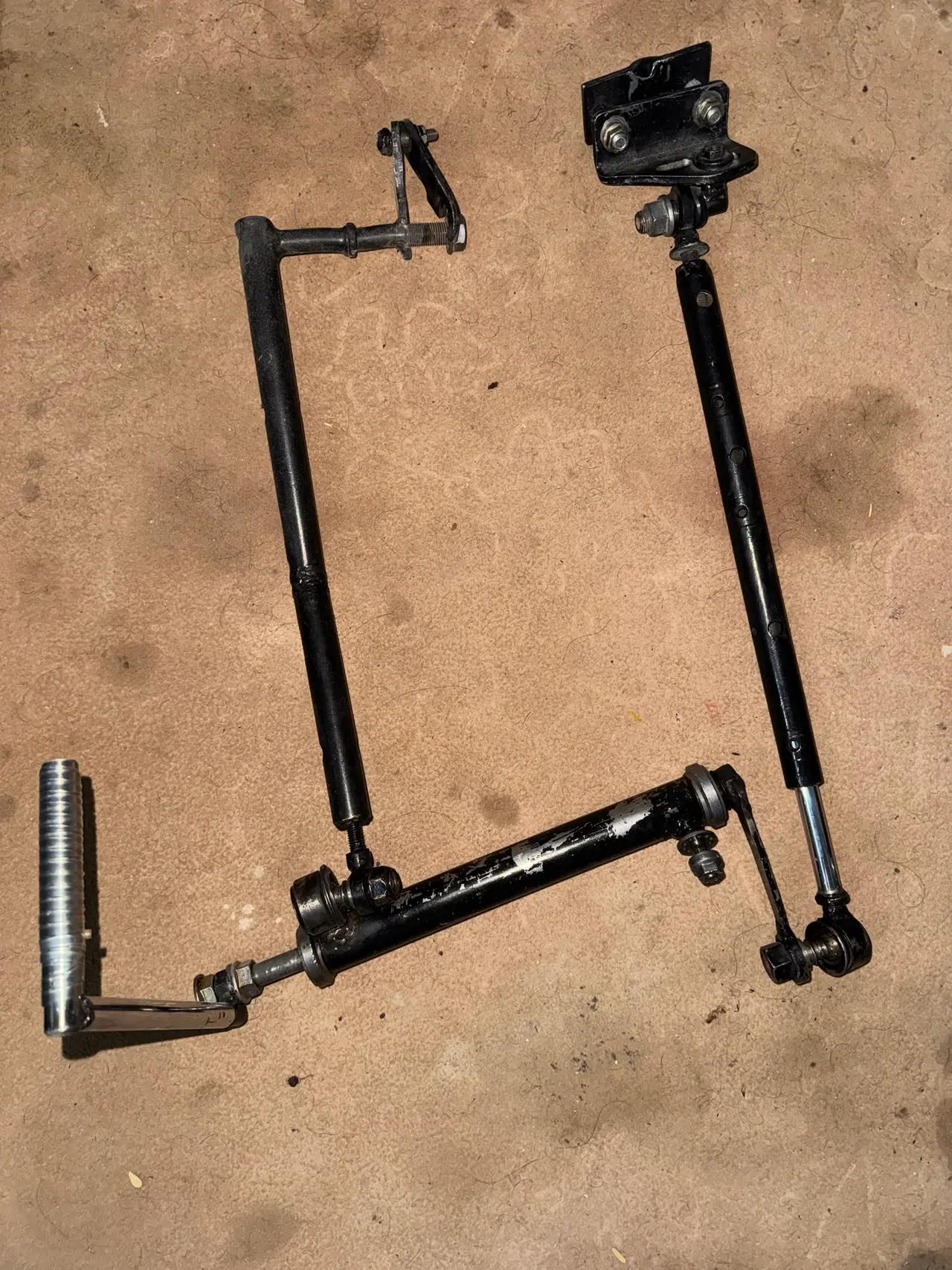
A car shock absorber and scrap parts
The most recent one, and the most worked out. There's a ball joint at every pivot now.
2025
What we make and repair
Alongside the hand controls, this is the day-to-day work: fixing and adapting the equipment people already depend on.
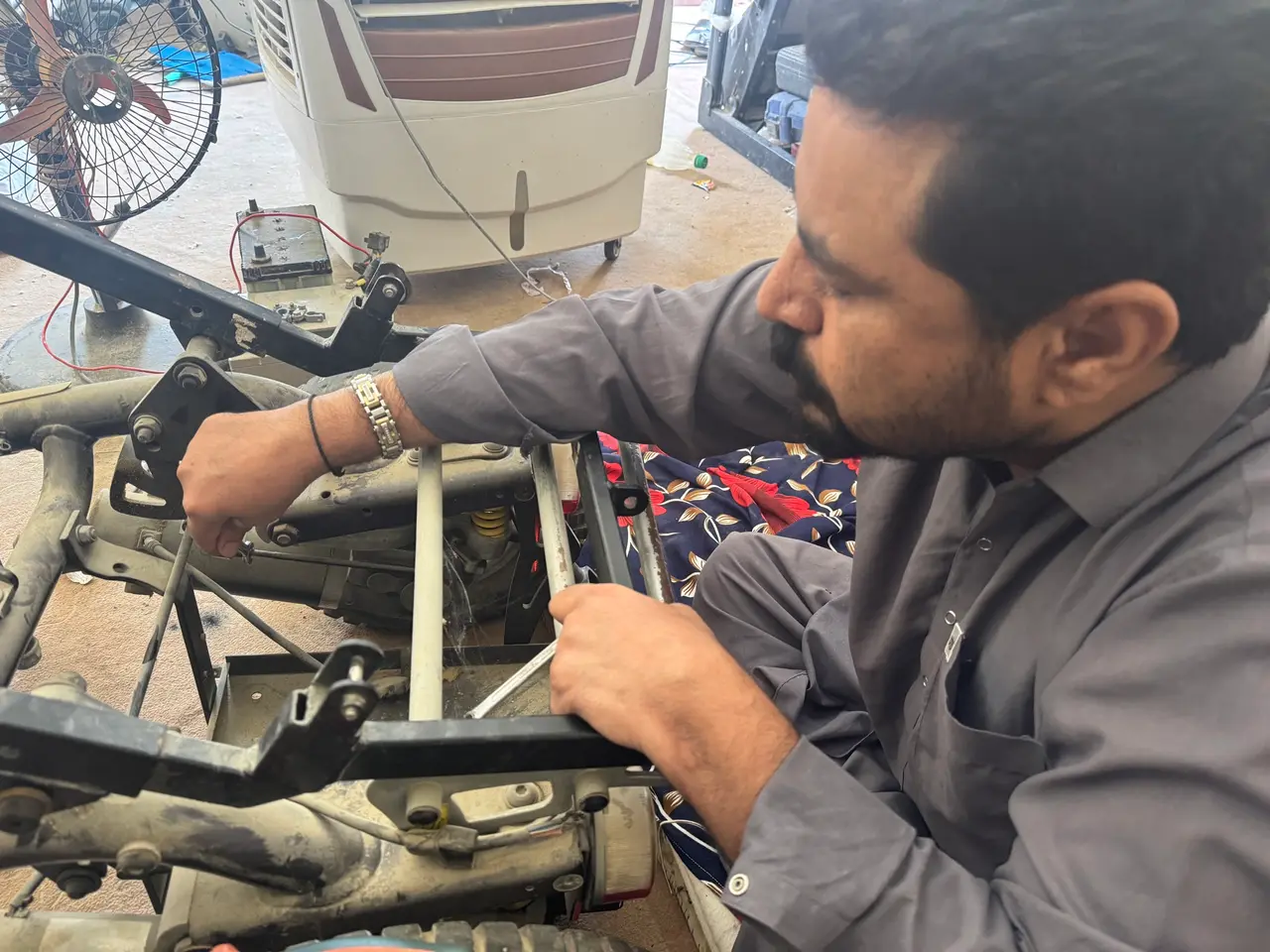
Wheelchair repairs, manual and powered
We fix worn bearings and cracked frames, dead batteries, joysticks that won't respond. It's often cheaper and quicker to fix the chair someone already has than to find a new one.
Ongoing work
Photo to come. A repaired standing frame set up beside the workbench, adjusted and ready to test. Standing aids
Standing frames let people spend part of the day upright, which is good for health and makes it easier to reach things. We repair and adjust them so they stay steady and safe.
Ongoing work
Photo to come. A hip and knee brace being shaped and fitted, with padding and straps on the bench. Hip and knee braces
We make and adjust hip and knee braces so they fit the body that wears them. We keep reworking the fit until it's right. A brace that doesn't fit just ends up in a cupboard.
Ongoing work
Photo to come. A power-wheelchair rebuild we plan to photograph start to finish. Power wheelchair rebuild
A full rebuild we plan to record from start to finish. It'll be the first one we photograph the whole way through.
Planned
3D printing, and what we hope to make
This is the direction we want to grow in. These are things we hope to make as the workshop grows, not things we make today.
e-NABLE volunteers around the world already print assistive devices and share the designs openly, free for anyone to use. With a printer here, we could take a design that already works and make it in Turbat, for very little.
Things we'd like to be making:
- Prosthetic hands and arms, printed from designs that already work
- Adaptive tools: grips and holders that make everyday objects usable
- Custom parts for wheelchairs and braces that are hard to find here
If you know this work, or you have a printer sitting idle, we'd like to hear from you.
Where it began, and where it meets art
Two projects at either end of this work: the first thing Ehsan ever built, and the sculpture he finished his degree with.
No photograph exists. Ehsan built this in 2000, before camera phones or the internet reached Turbat.
The calf brace
When Ehsan was a child, a calf was born whose back legs didn't work. He took an old tricycle apart and built it a brace so it could get around. It was the first thing he ever built to help something move.
2000, where it began
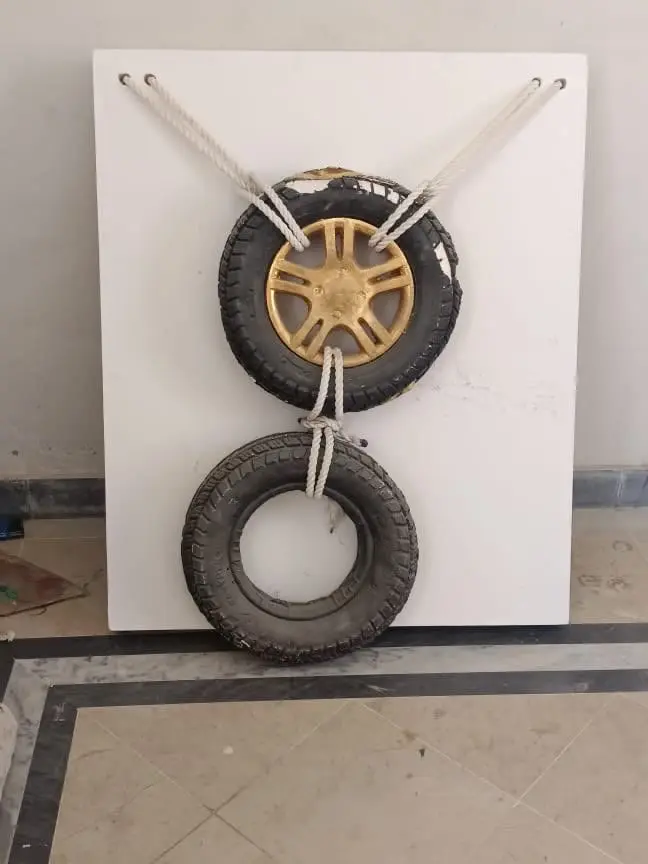
Fine Arts thesis
Ehsan's thesis was about living with a disability in Balochistan: the physical barriers, the social ones, and how little rehabilitation and assistive equipment reaches people here. In his own words it isn't only sculpture, it's a call for more accessibility, dignity and inclusion.
Completed 2025
See the work as the photos arrive
The gallery fills up as Ehsan photographs the work. To follow along or ask about a repair, get in touch.